
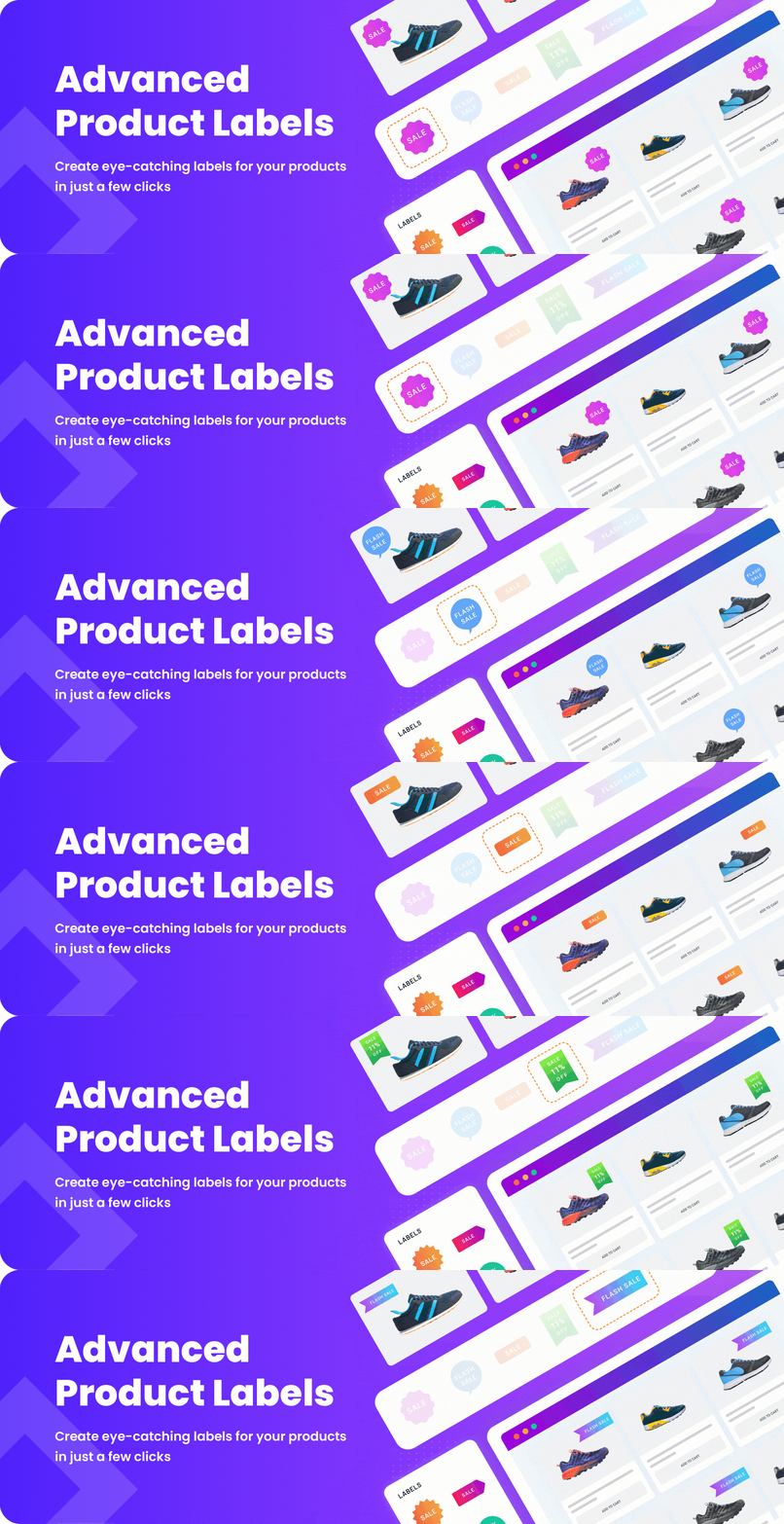
Product labeling serves as the bridge between your brand and the consumer. It isn’t just about aesthetics; it is a critical combination of legal compliance, consumer education, and marketing.
A high-quality label description typically breaks down into three distinct layers.
1. The Core Components
Most product labels follow a standard hierarchy to ensure the customer finds essential information immediately:
- Primary Display Panel (PDP): The front of the label. It must include the Product Name, Brand Identity, and the Net Quantity (weight or volume).
- The Information Panel: Usually on the side or back. This contains the “technical” data:
- Ingredients/Materials: Listed in descending order of weight.
- Usage Instructions: Clear, step-by-step guides or “best used with” suggestions.
- Safety Warnings: Necessary for compliance (e.g., “Keep out of reach of children”).
- Manufacturer Details: Name and address of the producer or distributor.
2. Crafting the “Selling” Description
Beyond the legal requirements, the “Description” is where you persuade the customer. Modern labeling trends favor benefit-driven copy over feature lists.
| Feature (What it is) | Benefit (What it does for them) |
| “Made with 100% Recycled Paper” | “Eco-friendly packaging you can feel good about.” |
| “High-speed 10Gbps Transfer” | “Move your largest files in seconds.” |
| “Sulphate-Free Formula” | “Gentle on skin for a daily clean without irritation.” |
Pro-Tip: Use Active Verbs. Instead of “This product helps with…”, use “Revitalize your…”, “Secure your…”, or “Simplify your…”.
3. 2026 Trends: Smart & Interactive Labels
Labeling is no longer static. Technology has turned the physical label into a portal for more information:
QR Codes & NFC Tags
Rather than cluttering a clean design with blocks of text, brands are using Dynamic QR codes. These link to:
- Real-time warranty registration.
- Video tutorials for product setup.
- Full transparency reports (where the materials were sourced).
Clean Label Movement
Consumers are increasingly wary of “wall of text” ingredient lists. The “Clean Label” trend focuses on:
- Minimalism: Using white space to highlight key certifications (e.g., Organic, Cruelty-Free).
- Plain Language: Replacing chemical names with recognizable alternatives where legally possible.
Checklist for Effective Labeling
- [ ] Legibility: Is the font size at least 1.6mm (based on the “o” in the text) for legal compliance?
- [ ] Contrast: Does the text pop against the background color?
- [ ] Durability: Is the label material resistant to the product’s environment (e.g., waterproof for shower products)?
- [ ] Hierarchy: Is the most important benefit the first thing the eye sees?
Leave a Reply